LEATHER GUIDE

A LIVING MATERIAL

Leather is a natural material—living, unique, and shaped by both nature and craftsmanship.
Each hide bears its own marks, and through use, the material continues to develop over time.

We strive to highlight the natural expression of the leather, not hide it.
Through careful processing, the material retains its character, variations, and authenticity.

In this guide, you will find explanations of terms, techniques, and properties that will help you understand and choose the right leather.

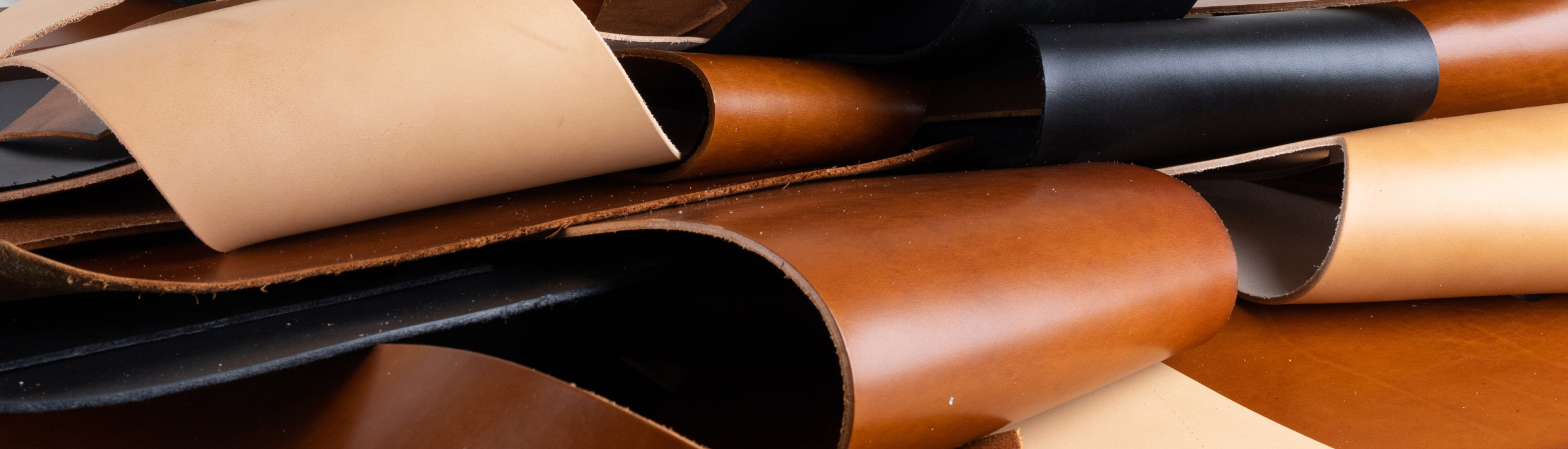
Tärnsjö Garveri Leather Scraps

Why choose leather from Tärnsjö Garveri?

With us, everything begins with the raw material.
We exclusively use Swedish cattle hides—carefully selected from local Swedish farms, available with full traceability throughout the entire process.

The leather is a by-product of the food industry, which we reclaim and refine into a material of long longevity and high value.

We do not work to remove the traces of life.
We highlight them.

The raw material follows the rhythm of nature. During spring and summer, when the animals roam freely outdoors, grazing and living as they should, the hides gain more life and variation. Marks from bushes, trees, and insects are a natural part of the material—just as our own skin is affected by the changing seasons.
During autumn and winter, the hides are often more uniform, but also more restrained in their expression.

At Tärnsjö, the entire process takes place under one roof—from raw hide to finished leather.
Each hide is processed, inspected, and sorted based on its unique characteristics, where the experience of our craftsmen determines how the material is best utilized.

We work with the material as it is—not as we wish it to be.
For us, perfection is not about hiding, but about preserving and enhancing.
The result is a leather that is living, honest, and genuine.

This is also why we never use fillers or pigment-coat our leather.
We hide nothing.

Instead, we emphasize the natural character of the leather: a surface that breathes, ages, and develops a beautiful patina over time—something that is significant for vegetable-tanned leather.

To choose Tärnsjö is to choose authenticity.
A material with a clear origin, full of life, and with a story that continues together with its user.

Material & Quality

Vegetable Tanning

A traditional tanning method using natural substances from the plant kingdom. It produces a durable and living leather that ages beautifully.

Grain

The top side of the leather with its natural structure. Here, pores, marks, and the unique character of the hide are visible. It provides a durable and living leather.

Flesh Side

The back of the leather. It has a softer and more fibrous structure.

Split

Leather from the lower layers of the hide after it has been split. It lacks a grain side and has two flesh sides. Often sold as split suede, a coarser type of suede suitable for items such as shoes, carpenter belts, and blacksmith aprons.

Patina

The natural change that occurs as the leather is used and ages. The color deepens and the surface gains more character. Each product acquires its own unique expression.

Proof of Authenticity

Natural variations in the hide, related to the animal’s age and skin structure, occur in all leather.
Small marks, scars, insect bites, and structural differences affect neither durability nor function—instead, they are a sign of the material’s authenticity and living origin.
Each hide is unique, and these subtle variations are part of what gives the leather its character.

Product Longevity

An approach where products are created to last over time, both in function and expression. Through careful material selection and craftsmanship focused on quality, the leather can age beautifully, be shaped by use, and live on for a long time. The ability to care for, repair, and use the product over and over again is an inherent part of its lifespan. For us, this means that products are not just used; they evolve, bear traces of their life, and become more beautiful with time.

Leather Types and Treatments

Aniline Leather

Leather that has been dyed through without a covering finish. It provides a natural, living surface where the variations of the hide are visible.

Semi-Aniline Leather

Dyed-through leather with a thin protective finish. It provides a slightly more uniform surface while preserving the natural expression.

Suede

Leather where the flesh side has been buffed to create a soft surface.

Split Suede

Leather from the lower layers of the hide after it has been split. It lacks a grain side and has two flesh sides. Sold as split suede, a coarser type of suede suitable for items such as shoes, carpenter belts, and blacksmith aprons.

Nubuck

Leather where the grain side has been lightly buffed to achieve a matte and velvety surface. It retains more of the leather’s strength with a soft and exclusive expression.

Parchment

The process consists of dehairing, scudding, lime splitting, and deliming before the hide is gently dried.
The result is parchment—a light, thin, and firm material that allows light to pass through. Common areas of use include drumheads and lampshades.

Leather Finishing

Shaving

A process where the leather is thinned down to the desired thickness for various applications.

Milling

A softening mechanical process where the leather is tumbled in large drums. It produces a soft and supple leather with a more living structure. The structure varies naturally across the hide.

Flesh Side Treatment

The flesh side can be treated to reduce the risk of color transfer and to provide a smoother, more finished appearance.
During processes such as shaving, the flesh side becomes lighter. If it is to be visible in the finished product, it can therefore be treated with pigment to achieve a deeper color tone and a more uniform impression.
Flesh side treatment is a way to both improve function and enhance the overall aesthetic—especially in products where the back of the leather is visible.

Sorting & Grading of Hides

All our hides undergo the same rigorous tanning process. After tanning, they are trimmed and sorted based on the natural characteristics of the raw material.

Grading always takes place after tanning and is based on how the animal lived its life. Marks such as scars, insect bites, and natural variations are part of the material and influence the sorting the hide receives. The tanning process itself is the same regardless of the grade.

Utilizing the Entire Hide

Leather is a natural material where each hide is unique. For us, it is important to use as much as possible of every hide—both out of respect for the raw material and to minimize waste.
If you are working with larger products, we recommend planning your cutting so that smaller parts can be taken from the surrounding areas. Scraps are well-suited for smaller products or components, but also work excellently for less prominent parts of a product, such as bottoms or interiors.
By planning your use of the hide, you can utilize the material in the best way and get the maximum out of every hide—regardless of sorting.

A-Hides, Prima

Approximately 5% of our production.

Hides of very high quality with few natural marks. Any damage is primarily located at the outer edges or in the neck and rarely affects large continuous surfaces.
Suitable when you need to obtain large, clean pieces of leather. Long lead time as we do not produce a large proportion of prima hides.

Approximately 90% of the hide consists of larger, continuous surfaces with fewer marks. With proper planning, a significantly larger part of the hide can be utilized, depending on the product and area of use.

B-Hides, Sekunda (Standard)

Approximately 80% of our production.

Our most common sorting. Natural variations such as scratches, small holes, scars, and shade variations occur here. Variations can be found both at the edges and more centrally in the hide.
Works for both larger and smaller parts, depending on how you allocate the material.

Approximately 70–90% of the hide consists of larger, continuous surfaces with fewer marks. With proper planning, a significantly larger part of the hide can be utilized, depending on the product and area of use.

C-Hides, 3rd Sorting

Approximately 15% of our production.

Hides with a larger proportion of natural marks and damage across the entire surface, such as scratches, holes, and more pronounced structural variations.
Best suited for smaller components or projects where the character of the material is allowed to stand out.

Approximately 40% of the hide consists of larger, continuous surfaces with fewer marks. With proper planning, a significantly larger part of the hide can be utilized, depending on the product and area of use.

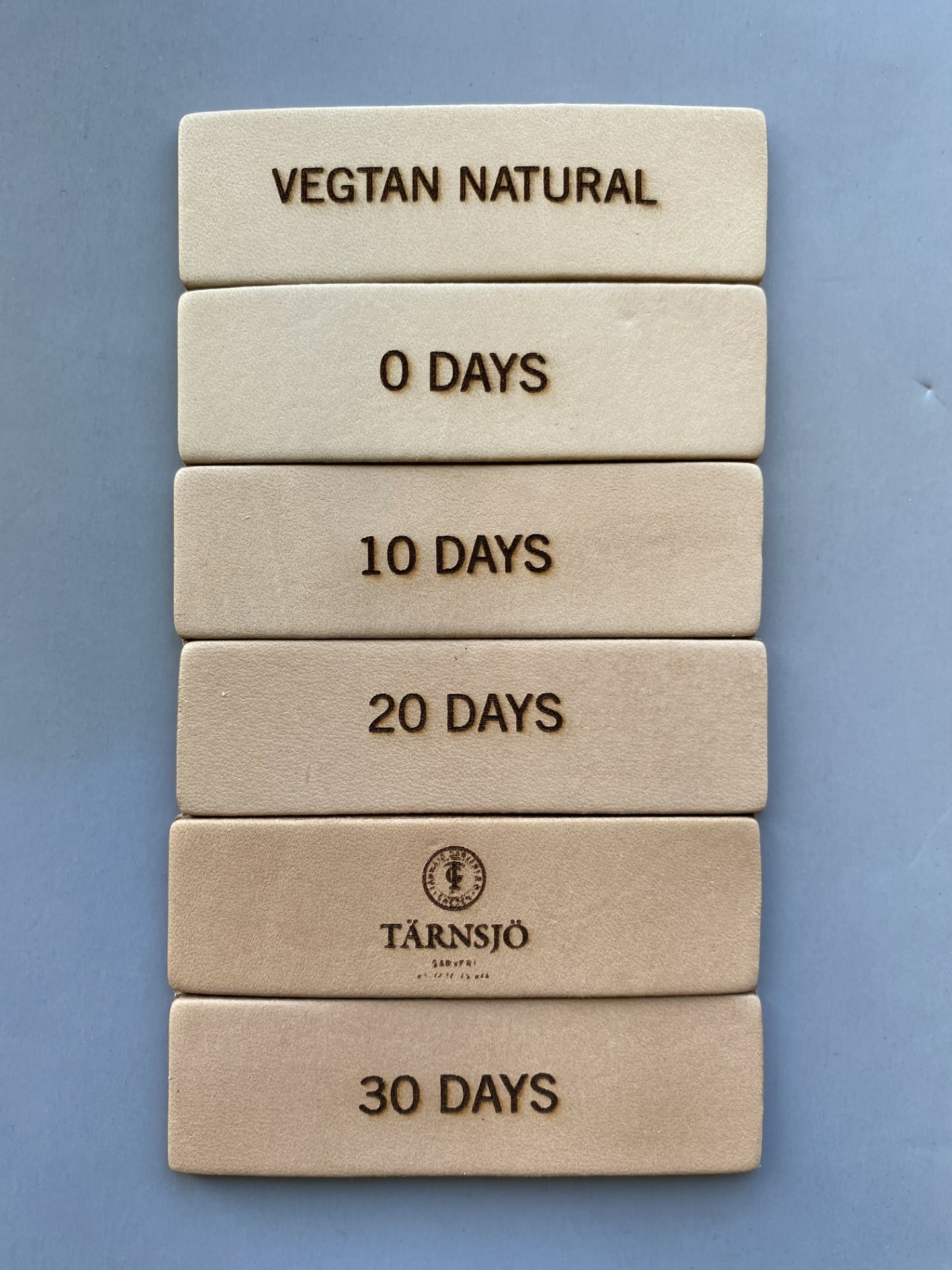
how the leather develops patina

From Light to Living – The Journey of Leather

This is a living material in transition.

From the light tone of its origin, the leather gradually begins to darken—influenced by light, heat, and touch.

Already after a few days, the first traces of use appear.
Over time, the color deepens, the surface becomes richer, and a natural darker patina emerges—unique to every product and every user.

What begins as clean and light develops into something warmer, deeper, and more personal.
A material that not only lasts over time but tells its own story.

See the image to the left. Here, the leather pieces have only been exposed to daylight for the specified time—without use or wear.
It shows how the leather naturally darkens over time, even before it begins to bear traces of use and develop its full patina.

Storage of Hides

When you receive your hides, we recommend that they are unrolled and stored hanging over trestles.
This reduces the risk of creases and helps the leather maintain its natural shape.
Feel free to cover the hides with a cloth to protect them from daylight, which can otherwise affect the color and surface structure over time.

Read here how to care for your leather products.

Saddlery Terms

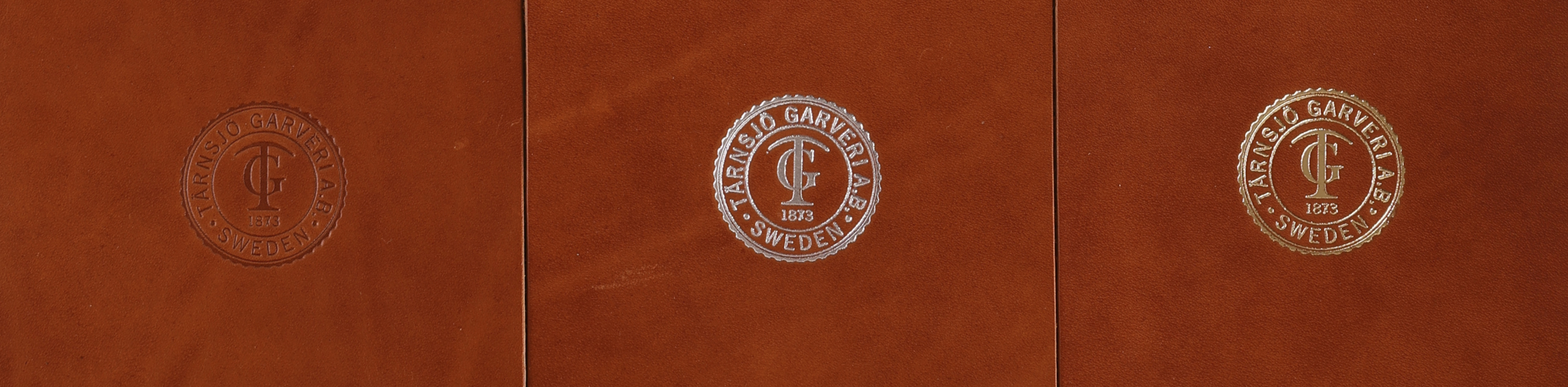
Embossing

When a pattern, texture, or logo is pressed into the surface of the leather. To do this, a die is required.

Heat Embossing

Embossing using heat and pressure. Provides a sharp and permanent result. To do this, a die is required.

Foil Stamping

Embossing where colored foil is used together with heat. Provides a distinct and often metallic finish. To do this, a die is required.

Laser Engraving

Laser engraving is a technique where a focused laser beam burns away the outermost layer of the leather, creating a permanent mark.
The result is a darker, slightly recessed engraving—an effect that occurs when the heat burns the leather surface. This is done digitally and no die is needed.

Die

An engraved tool, often featuring a logo, used for embossing. Using heat and pressure, the motif is transferred to the leather with high precision.

Cutting Die

A tool used to punch out shapes in the leather—like a cookie cutter. Provides precise and repeatable results.

Edge Paint

Paint applied to the cut edges of the leather. Protects and provides a smooth, refined finish.

Creasing

Grooves or lines pressed into the leather, often along edges. Used both decoratively and to create a more defined shape.

Edge Beveled

The edge is cut and shaped, often with a slight radius for a softer feel. The radius can be varied depending on the desired expression. The foundation of a well-finished edge.
Examples of Embossing

Embossing, silver foil stamping, gold foil stamping

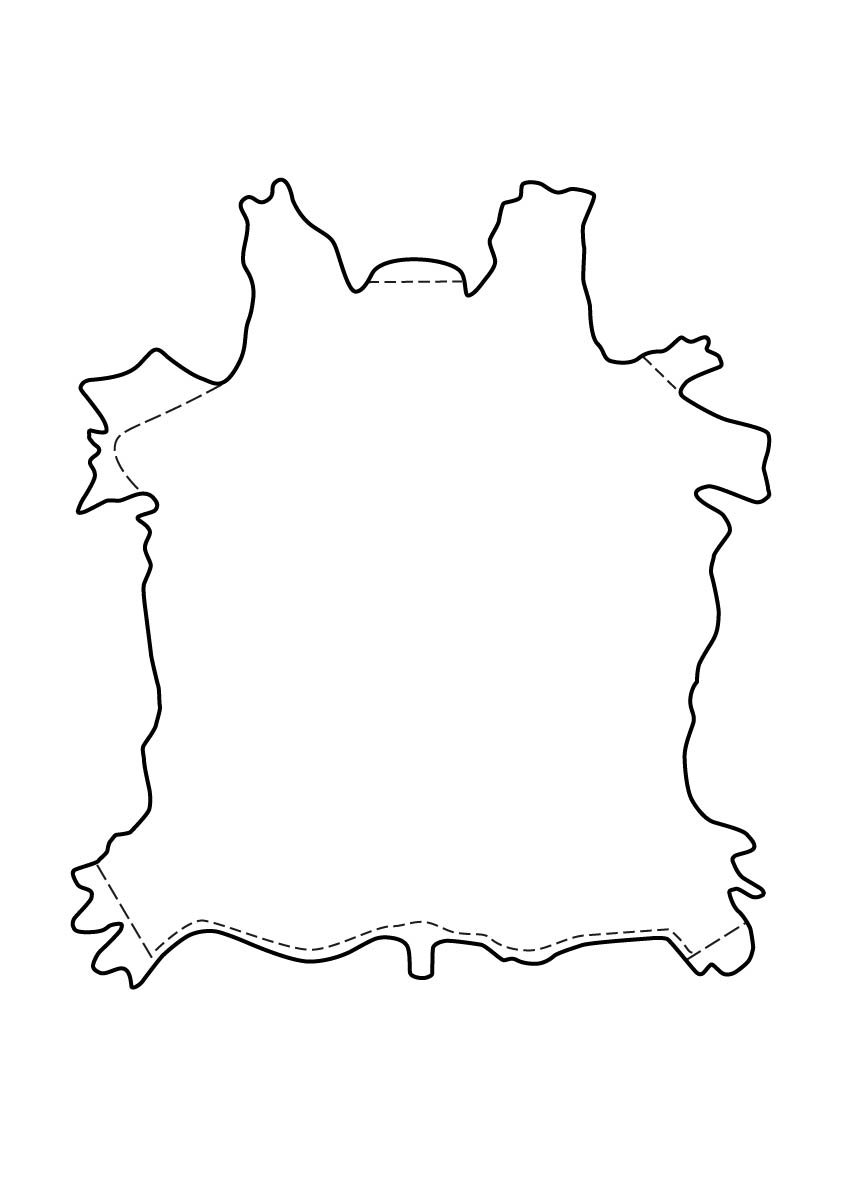
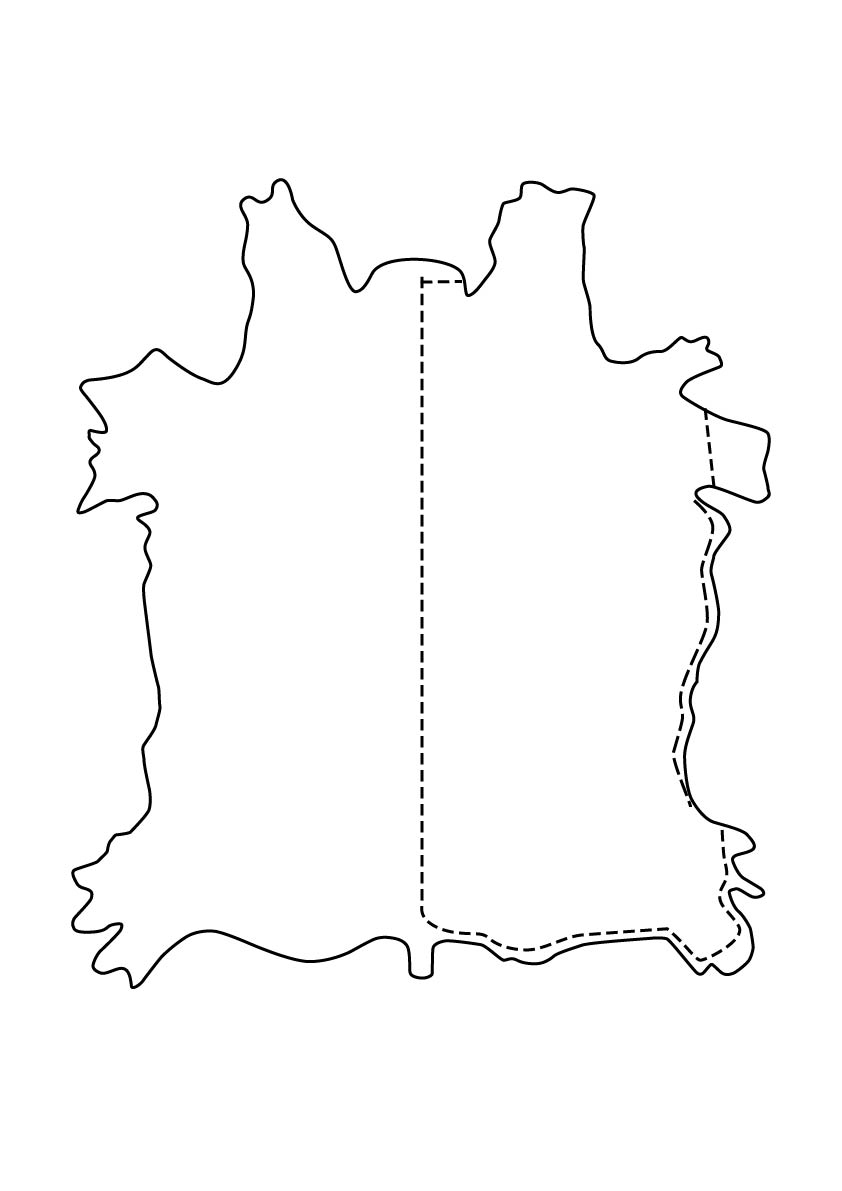
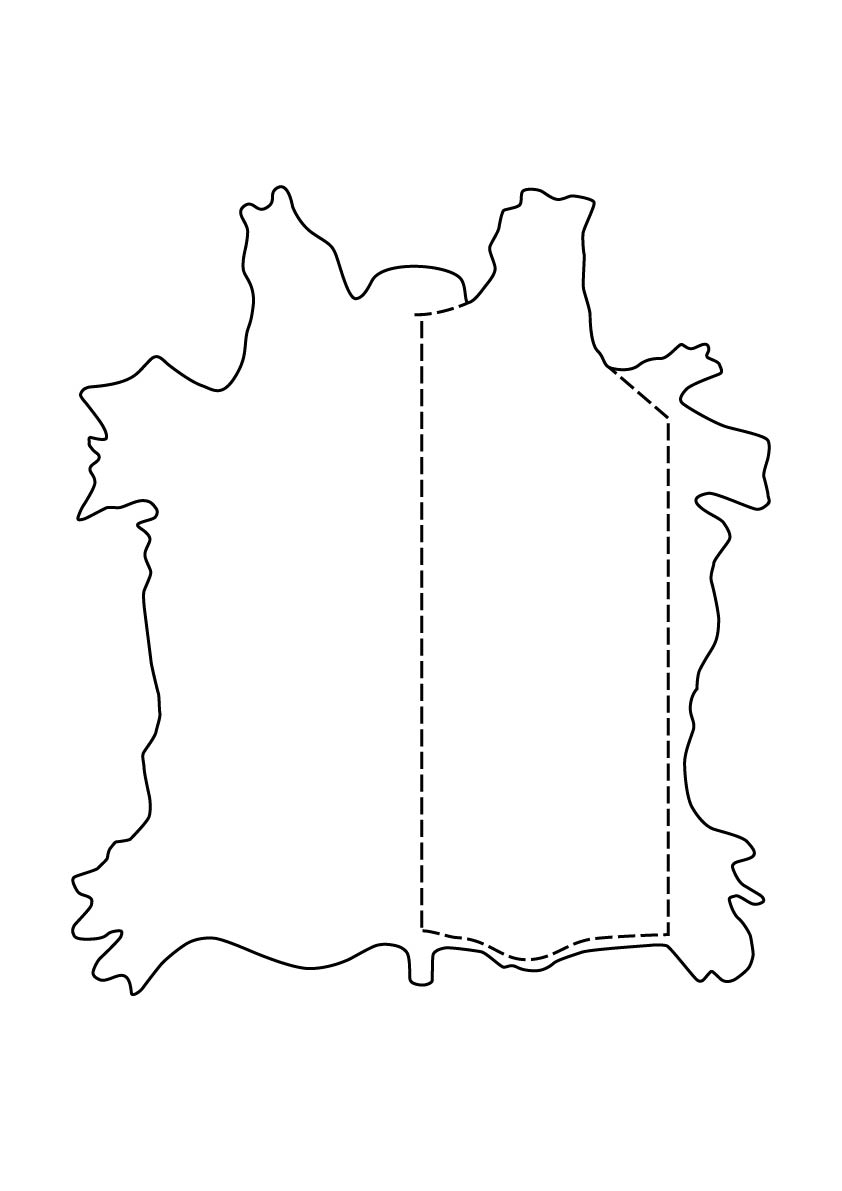
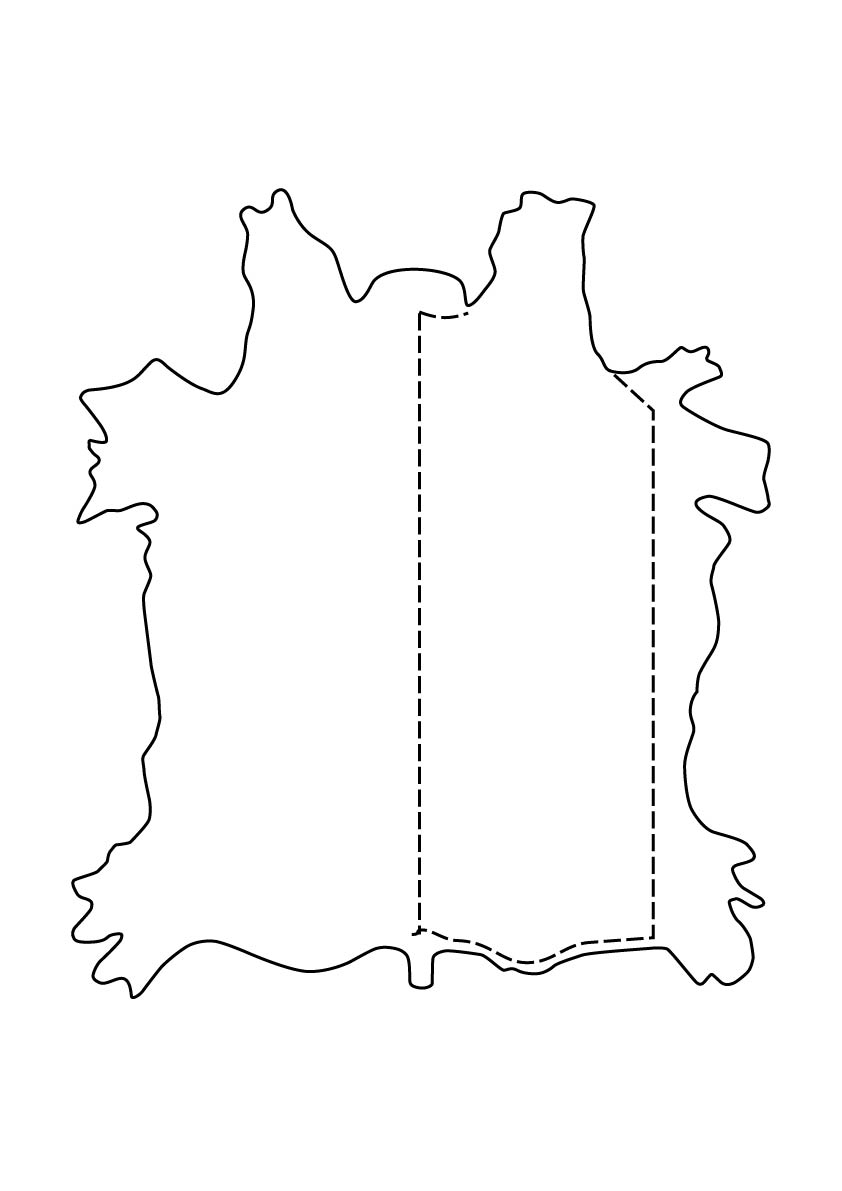
How Our Hides Are Cut

UPHOLSTERY LEATHER 1.1-1.3 mm

Upholstery leather is sold in full hides, and each hide is approximately 45 square feet (ft²).

SIDES 2-2.5 mm

Sold in half hides and are approximately 22 ft².

STRAP LEATHER 3-3.5 mm

Sold in butts, approximately 20 square feet (ft²).

PANEL LEATHER 4 mm

Sold in butts, approximately 20 square feet (ft²).

Measurements

Square Foot (ft²)

A unit of area used to measure leather surface.
1 m² ≈ 10.76 ft².
To convert, multiply m² by 10.76.

This post is also available in: Swedish